Uncategorized

5 Reasons to Love Salesforce Dataloader

In today’s world of bits, bites, apps, and users, information is the currency. It’s what makes our digital world move. This information needs to be manipulated with care and concern to make sure that it exists where it’s supposed to and the way it’s supposed to. When it comes to Salesforce, one of the best ways to handle and move information is with Dataloader. Dataloader is a web-based tool to import and export records. At its maximum, dataloader can handle 5 million records in one operation. In my role as a Support Analyst for Brite, Dataloader has become my weapon of frequency and choice. It was the key to acclimating to my role and as a result, I must share my appreciation for the tool. For the sake of not boring you to death with a bunch of technical jargon and details, here are my top five reasons why I love Dataloader.

Uncategorized

What You Should Know About Cloud Storage and Keeping Your Data Secure

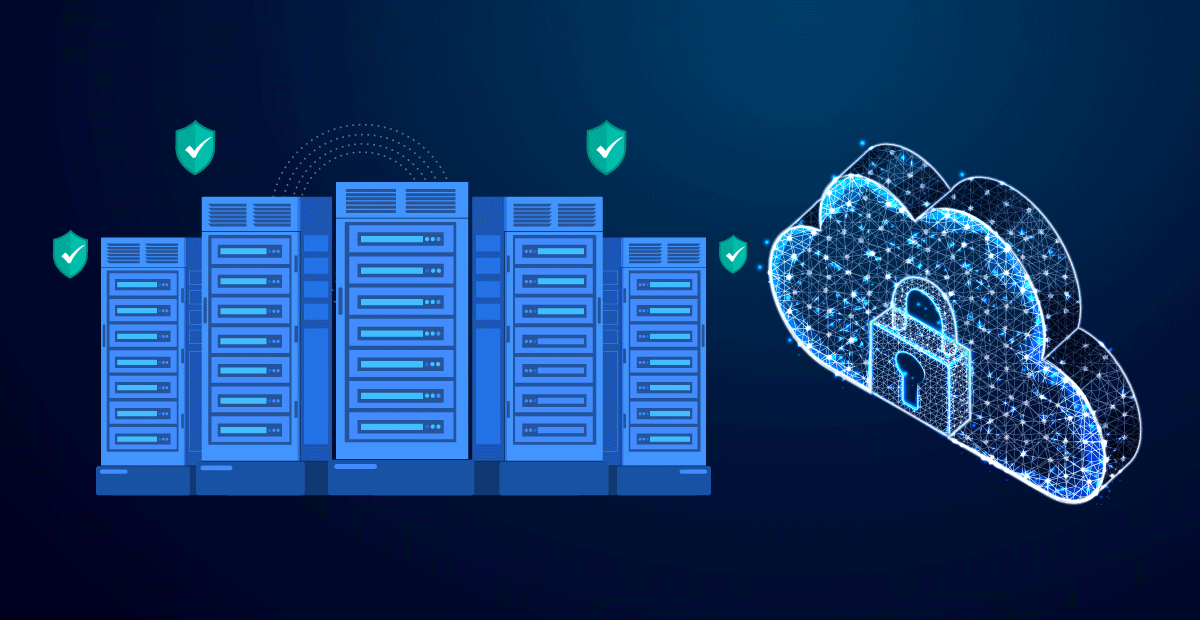
Over one billion gigabytes of data are stored in the cloud networks worldwide. Processing and storing data in the cloud has revolutionized the IT world and is both an efficient and cost-friendly way to store data. There are two types of clouds: private clouds and public clouds. A private cloud is an organization’s own cloud that contains only their compute infrastructure and data. On the other hand, a public cloud is a cloud that is shared by multiple different organizations, also known as a multitenancy. In a multitenant architecture, tenants share infrastructure resources such as their web server, application services, middleware, their database, and compute resources. Even though the resources are shared, the tenant-specific data is accessible only to that particular tenant. You could think of private cloud as owning your own home, while public cloud is like living in an apartment complex. When living in an apartment, you may share resources such as water, electricity, etc. However, your unit (or data) is secure and only accessible to you. In this post, we’ll be talking about how/where the data is stored, how the data is secured, ways that this data can be breached, and how to mitigate your risk. The first thing that comes to mind when thinking about cloud storage is where all of this data is stored. Cloud data is stored in data centers that can be virtually anywhere in the world. Most cloud storage service providers offer storage on a pay-per-use-basis, so you would pay for each gigabyte of data per month. The user can connect to the database server via the internet and manually or automatically send files over. All of this data can be accessed through a web-based interface. At this point, you may be thinking, how do organizations know that their data is safe? Cloud providers use authentication, access control, encryption, and built-in firewalls to keep your data safe at the most basic level. Authentication is the type of security that is used on most websites and devices such as passwords and security questions. Access control restricts access to the data if you are using an unknown, unauthorized, or public device. You can test these security measures by engaging with a cybersecurity professional who can validate and assess security measures and provide additional extra security measures. Encryption is one of the strongest ways to secure your data by using algorithms to scramble the data so it can be accessed only by the users who are authorized to access the data. The built-in firewalls make sure that those who are not authorized are not able to access your cloud infrastructure. Sharding is another way of securing data where it is split into chunks and encrypted on its own, meaning if the code was to be decrypted then they would only find the data in blocks, rather than all of it. Some cloud providers only let you preview the content instead of downloading the data, so that it is more secure to share. Highly regulated organizations are also starting to use the hybrid approach in which they keep sensitive data in a private cloud and the rest of their data in a public cloud. However, this does not mean your data is 100% safe. It is not impossible for cybercriminals to get into these files by guessing security questions or bypassing passwords. Your data could also at any point get wiped out, lost, or stolen. The data is stored on servers and systems that are not yours meaning you don’t have control over them. As a solution to this, some cloud providers are starting to let the users choose their own encryption keys, so no one from the provider’s side has access to your data. The good news is there are many more solutions for improved data security! You have options such as backing up your data locally, engaging with cloud service providers that offer local encryption of data, implementing multi-factor authentication and protecting the computer systems that access your cloud resources by implementing anti-virus and anti-spy security controls. Overall, with cloud storage the positives outweigh the negatives. With governance and adoption of the right risk-mitigating strategy offered by companies such as Brite, you can select the ideal cloud service (Public, Private, or Hybrid) and secure your data safely. If you’d like to explore your options for cloud security solutions, consult with our cloud experts today.

Uncategorized

Coming to the Cloud

Without a doubt, everyone has been affected by COVID-19 in some way. Whether you have lost your dream job or have been forced to use screen shares for your daily activities with coworkers, our lives have changed. We have adapted by shrinking monthly personal and professional budgets and doing a massive amount of yard/housework, but we are in this together! As state and local governments begin the staged reopening rollouts, it is vital that those who have been able to stay open look strongly at how we continue to protect our employees. Business leaders can ask themselves questions like “How has my team preformed?”, “What gaps can we address?”, and “Did we actually become closer?” Here at Brite, there is one gap that has become overwhelming apparent to us. Not all businesses have the capability to perform or monitor everyday duties due to the limitations of their current platforms. As someone that has spent the last 10 years of my career leveraging the use of technology, I was a bit thrown off by learning this information. How does a sales manager know if his or her team is staying on top of their activities if they still are using an “off prem” CRM solution? How can they collaborate efficiently on documents (RFI’s, RFP’s, SOW’s, Contracts, etc.)? The reality is they either can’t know and can’t collaborate, or they are required to circulate countless emails. Some companies are still leveraging a VPN solution, and that may work for certain businesses. Alternatively, many other companies along with Brite believe that cloud computing technologies will be leveraged even more in the coming years than they already are currently. I have been impressed with the speed of growth with tools like Zoom, Join.me, Google Hangouts and other platforms that have seemingly taken over the world in the last few months. We are confident that cloud innovation for CRM, Marketing Automation, and Cybersecurity will be the next adoption trend bringing companies closer together at a rapid rate. As a cloud service provider, Brite partners with our customers to identify and deliver the ideal cloud solution to maximize business value. If you or your organization would like to have a conversation around the different ways cloud technologies can better prepare you for the changing landscape at all levels of your business, connect with our team of experts today.

Uncategorized

4 Salesforce API Enhancements Released in Spring 2020

In Salesforce’s 2020 Spring Update, there are several major new Application Programming Interface (API) enhancements. API is a piece of software that allows two software intermediaries to connect. APIs define what kind of calls and requests can be made between software systems, define data formats, and which conventions to follow, essentially specifying how two different software systems can communicate and interact with each other. Using an API allows users to deliver solutions rapidly by sharing and exchanging information seamlessly. There are many software systems and applications that can be connected with Salesforce using APIs. For instance, Salesforce integrates seamlessly with Jira, Zoom, SAP, Peoplesoft, Quickbooks, Moodle, Workday, and Eventbrite to name a few software applications. 1. Increased Daily Salesforce API Call LimitThe recent Salesforce Update has increased the daily Salesforce API call limit from 15,000 API call requests per day to 100,000 API call requests per day. In addition, the daily maximum cap of 1,000,000 API requests per day has been removed, allowing your org to exceed the daily limit without being flagged or blocked by Salesforce. Furthermore, with the new usage-based entitlement, a limited Salesforce resource that your organization can use on a periodic basis, the org user can view how many API requests have been built up over the last 30 days. 2. New Beta Version of MetadataComponentDependencyAnother important API Spring Update is the beta version of the MetadataComponentDependency Queries in Production and Sandbox Orgs. By using these Queries, users can view dependency relationships between metadata in their orgs. Finding these dependencies allows users to break the metadata into packages and parts, and then determine whether the metadata is safe to delete. 3. Ease of Locating Object DocumentationThe recent Spring Update has also made finding Salesforce object documentation easier. The key advantage of this feature is that it removes repetitive object documentation and groups related objects together so that users can find what they are looking for in a simpler manner. 4. Increased Relevancy of Symbol TableIn addition, the Salesforce Symbol Table no longer includes non-global implementation details for managed packages. This update confirms that the Symbol Table does not show more information than what is required for the managed packages. This feature will save you time, as less code is required. The Salesforce 2020 Spring Update’s API enhancements allow users to make more API calls daily, view the number of API requests in the past 30 days, Queries to view dependency relationships between metadata in orgs, and a Symbol Table that shows only specific information related to managed packages. Overall the Spring Updates yield a better user experience for organizations that use Salesforce to expand their capabilities by integrating with other external systems and applications through APIs. Brite, a certified Salesforce Silver Partner, has expertise in implementing Salesforce APIs for several software systems and clients. Need assistance with your API implementation and leveraging the recent update? Connect with our Salesforce team today.

Uncategorized

Brite is Awarded GSA Multiple Award Schedule

The GSA Multiple Award Schedule endorses Brite’s strong past performance in IT Services. INDIANAPOLIS and WASHINGTON, June 2, 2020 /PRNewswire/ — Brite is a successful Federal IT Services provider with a wide range of expertise in multiple aspects of technology. Some of these include but are not limited to, private, public, and hybrid cloud implementation services, AI, and Robotic Process Automation (RPA). Brite was accepted into the SBA 8(a) program in 2017. Recently, Brite has been awarded the GSA Multiple Award Schedule. President of Brite, Leena Victoria says, “We at Brite take great pride in providing successful solutions to our Federal, State, and Local Government clients by adding value to their business since 2006.” GSA Schedules are also known as MAS (Multiple Award Schedules) and Federal Supply Schedules. MAS Schedules are long-term contracts across government agencies. These contracts are with commercial firms that give federal, state, and local government buyers over 11 million commercial products and services at discounted prices. GSA has approved Brite to participate as a prime contractor for awards in Special Item Numbers518210C – Cloud and Cloud-Related IT Professional Services54151 – Software Maintenance Services54151S – Information Technology Professional Services “All our past successful cloud implementations were recognized by GSA in awarding MAS Schedule with SIN 518210C – Cloud and Cloud-Related IT Professional Services.” adds Leena Victoria. By being awarded the GSA Multiple Award Schedule, Brite has demonstrated strong past performance in IT services to public sector agencies. They also have easy access to government orders since they are approved and verified by GSA. Government agencies are benefitted in multiple ways by working with Brite through GSA MAS Schedules by experiencing flexibility and choice, saving time, and realizing transparency.

Uncategorized

Creating A Seamless User Experience For IPDC

Brite replaced an outdated system for Indiana Public Defenders Council (IPDC) and launched a modern solution on Salesforce. Previously, IPDC employees were using a 20-year-old database that was limiting efficiency of the agency. The new Salesforce system allows agency employees to manage their case bank and provide excellent customer service to support Indiana’s public defenders. Our team recently scaled the solution to further enhance IPDC’s internal database with functions they did not have with their previous system. In addition to the case bank, the system will have a full document library including a motions bank, jury instructions, seminar publications, and more. IPDC will have the capability to independently maintain the library by uploading new files or replacing existing files. The technology modernization was extended further with Brite’s development of a community portal. On the community portal, public defenders can access documents, training courses from Moodle, event registration, and much more. The integrated public facing portal created a seamless user experience at the start of 2020. Brite’s implementation of Salesforce for IPDC has enabled the agency to offer improved services to public defenders and reduce the administrative burden of staff. The capability to access documents, purchase books and other resources, register for events, pay via integration with Indiana Interactive, and complete training are benefiting revenue streams for IPDC. It is also equipping Indiana’s public defenders with the proper resources to support Hoosiers across the state.

Uncategorized

Brite Builds a Modern Case Management System to Improve Outcomes for Hoosier Children

Developed by Brite, Enlite is an innovative case management system built on the Salesforce Lightning platform. This is the largest Salesforce implementation for State of Indiana government with over 1,000 system users. Prior to the Brite partnership, IN DCS used a 20-year-old legacy system. The outdated system made it difficult for employees to complete their daily tasks efficiently and effectively. Enlite has enabled IN DCS to securely document home visits via HIPAA, communicate via streamlined channels, share cases seamlessly across departments, immediately access vital information – all on one user-friendly system. Service providers use Enlite for intake, parent surveys, assessment, household management, internal and external referrals, establishing goal plans for families, processing claims and generating invoices. Enlite seamlessly integrates with external systems such as immunization registries for up-to-date immunization records and financial systems for claims reimbursement. The built-in evaluation module with extensive dashboards and reports provides key metrics for program managers, directors and other stakeholders. Before Enlite, case workers could only log notes on cases once they return to their site, making access to real time information impossible. With Salesforce Mobile Enablement, Brite introduced a mobile platform to allow case workers accessibility during home visits to promote timely documentation. Along with being mobile enabled, Enlite is conducive for collaboration. With Site to Site transfer capabilities, DCS employees can request and receive all required permissions to transfer a case and all corresponding records to a new agency within the system. This replaces the manual process of printing out forms, scanning as PDF, then emailing or faxing to the new agency. This feature not only saves times,it increases security of personal information. These are just a few examples of how Enlite has made an agency wide impact with technology modernization. Efficiency and timeliness are valuable, but the meaning stretches far beyond data and reports. Enlite allows IN DCS to take a proactive approach rather than risking a delayed response that could forever impact the life of a child. The improved services provided by IN DCS translates to improved quality of life for Hoosiers all across the State of Indiana.

Uncategorized

Brite Advances as Salesforce Silver Consulting Partner

Salesforce partnership brings growth to company and better opportunities to clients. INDIANAPOLIS, Sept. 3, 2019 /PRNewswire/ – Brite holds a strong presence in Indianapolis as a Salesforce implementation firm. They pride themselves on their ability to create strategic cloud solutions for their clients. Brite is thrilled to announce they have officially been named a Salesforce Silver Consulting Partner. “It’s a pleasure to be recognized for our efforts by Salesforce. I am immensely grateful for the dedication of our team and their contributions toward this advancement,” says Brite CEO, Jay Fernando.The Salesforce Silver Consultant Partnership requires a company to meet several milestones to demonstrate they are qualified to represent Salesforce as a preferred partner. These requirements include client engagement, employee expertise, and high customer satisfaction. Brite has proven its expertise through its highly skilled staff, of which 13 team members now hold at least one Salesforce certification reaching a total of 53 certifications. Brite not only focuses on hiring and growing expert talent, but also on creating quality relationships among staff as well as with clients. Brite’s clients agree as demonstrated by their high customer satisfaction score of 10 on Salesforce’s 10-point scale. “It is our goal at Brite to simplify our clients’ problems with innovative solutions and to deliver those solutions in a timely manner to enable our clients to reach their goals. Our clients trust Brite’s team to always be on their SIDE (Simplify, Innovate, Deliver and Enable),” added Jay Fernando. “We look forward to continually impacting the lives of those within our customer community.” Brite is making tremendous contributions to the local Indianapolis tech community with solutions reaching nationwide. Within the past few months, Brite has implemented several successful Salesforce-based solutions, including The Propshop, an online product catalog for U.S. Health and Human Services. As a newly recognized Silver Partner, Brite looks forward to the continued growth of its company and employees, allowing them to drive the success of their customers. About Brite Brite has been successfully implementing solutions for the private and public sector since 2006. Brite is a Salesforce Certified Silver Consulting Partner and has modernized technology for a variety of agencies and organizations. Brite confidently brings the right people, customized approach, and successful track record to each opportunity.

Uncategorized

The Propshop: An E-Commerce Solution Built on Salesforce Lightning Platform

A large federal agency was in need of an efficient, cloud-based system for employees to procure furniture and supplies within their warehouse inventory. The agency had a warehouse full of office furniture and supplies but lacked a system for utilization. Without a way for employees to procure the surplus inventory, government assets were not being reused and employees were lacking a way to obtain office necessities. Brite proposed an online product catalog, The Propshop, to meet their need. The Propshop is an e-commerce solution built on the Salesforce platform allowing agency employees to shop for inventory, make online orders, and receive notification for fulfillment of requests. The shopping portal presents the most recent inventory to the Propshop shoppers. All surplus items are displayed in an intuitive portal interface. Like most modern online shopping experiences, the Propshop offers a user-friendly e-commerce shopping cart feature. This allows end users to search and hold inventory and review items prior to checkout. Upon completion of an order, an email notification with an order summary is presented to the shopper. Once an order is placed, the internal team receives the order request and can confirm details with the shopper. Within Salesforce, the internal team has the ability to manage the status of the orders by converting a hold request to submitted or canceling a placed order. In addition, the order fulfillment provides a manual order tracking process that can send an email notification for each order status. The fulfillment team can view all the relevant data on a user-friendly dashboard. Building on Salesforce allowed us to create dashboards without the need to write code. Each dashboard can be globally accessible or uniquely custom to an individual. On the dashboard, KPI graphs display real time updates to inventory. There is drill-down capability on each chart allowing the fulfillment team to view each record down to the line item.There is also an option to display historical graphs to show change over time. We facilitated the option to export the data to Excel and/or print the charts,so the data can be shared with individuals who do not have a Salesforce login. The Propshop was a perfect fit for the agency’s Salesforce-based roadmap.With Brite as an implementation partner, this federal agency received fast delivery of a low maintenance and scalable solution with security backed by Salesforce. The Brite team solved the agency’s issue and now employees can shop, order, and receive government property for reutilization.