Uncategorized

Innovate or Stagnate: How to Introduce Products Faster and Build Lasting Customer Loyalty

According to McKinsey, 84% of business executives say that innovation is important to their growth strategy. Companies that innovate effectively capture new opportunities, set trends, and lead industries. Conversely, those that fail to innovate risk stagnation and irrelevance. More than 30% of companies that failed to innovate in times of crisis have become irrelevant. In this dynamic environment, the speed of product introduction is becoming increasingly critical. Not only does it enable businesses to outpace competitors, but it also significantly enhances customer engagement and loyalty. Customers gravitate toward brands that consistently deliver cutting-edge solutions promptly, making speed a crucial component of business success. The Current Challenges in Product Innovation Market Saturation In today’s markets, one of the most daunting challenges is standing out in a sea of competitors. Many industries are saturated with similar products, making it increasingly difficult for companies to differentiate their offerings. Innovation is key to capturing attention and carving out a unique market position in such crowded spaces. Complex Development Processes Traditional product development processes often involve multiple stages of validation and iteration, which can introduce significant delays and bottlenecks. These complexities not only slow down the time to market but also increase the costs associated with product development, making it harder for businesses to stay agile and responsive to market demands. Customer Expectations The expectations of consumers are higher than ever and continue to grow. Today’s customers expect personalized, high-quality products delivered at an unprecedented speed. They are also more informed and have the ability to compare options globally. Meeting these evolving demands requires businesses to not only innovate but also ensure that their innovations are both rapid and relevant. The Importance of Speed in Product Introduction First-Mover Advantage Being the first to market with a new product can significantly influence market share and establish industry standards. Companies that achieve this first-mover advantage often set the bar high, shaping customer expectations and preferences. This leading position not only offers the initial sales boost but also establishes a brand reputation for innovation and leadership, making it difficult for competitors to catch up. Rapid Feedback Loop Introducing products quickly into the market allows companies to benefit from a rapid feedback loop. Immediate customer reactions and interactions can reveal insights into product strengths and areas for improvement. This ongoing cycle of feedback and refinement accelerates the improvement of the product, ensuring it evolves to meet customer needs more precisely and quickly than through traditional prolonged development cycles. Strategies to Accelerate Product Development Leveraging Technology Digital tools and platforms are revolutionizing product development by streamlining complex processes. Technologies such as AI-driven analytics, cloud computing, and automated testing tools reduce manual labor, cut down development time, and increase accuracy. By integrating these digital solutions, companies can expedite product ideation, development, and market introduction, staying ahead of the competitive curve. With BRITE, the emphasis is on cutting-edge Salesforce development to create tailored solutions that streamline the product development cycle, from ideation through to launch, allowing for faster and more efficient processes. Agile Methodologies Agile practices are pivotal in accelerating product development. Unlike traditional methods that follow a rigid sequence, agile methodologies emphasize flexibility, continuous improvement, and rapid iteration. Teams working in agile environments can adapt quickly to changes, test new ideas, and refine products in real time, significantly reducing the time from concept to market. Collaborative Ecosystems Collaboration is a powerful strategy for innovation. By engaging with external partners, such as technology providers, industry experts, and even customers, companies can access diverse perspectives and expertise that enrich the development process. Integrating customer input early, particularly through co-creation and beta testing, ensures that the final product is closely aligned with market needs and expectations, thereby enhancing its success upon launch. Building Customer Loyalty Through Innovation Personalization Innovation opens the door to personalization, a key driver of customer loyalty. By leveraging advanced technologies, companies can now design products that cater to the unique preferences and needs of individual customers. This ability to customize products not only enhances the user experience but also makes customers feel valued and understood. Personalized offerings, from customized user interfaces to tailor-made product features, help forge stronger connections with customers, leading to higher satisfaction and loyalty. Quality and Reliability Ongoing innovation is crucial for improving the quality and reliability of products. As companies continuously refine their offerings, they can incorporate the latest technologies and feedback to enhance product performance. This commitment to quality reassures customers that they are investing in superior and dependable products. Over time, this builds trust and credibility, key components of customer loyalty, as customers are more likely to return to a brand that consistently meets their expectations with high-quality and reliable products. Engagement Engaging customers in the innovation process can significantly boost their loyalty. Initiatives like customer feedback surveys, beta testing groups, and community forums allow customers to contribute their ideas and suggestions. This involvement not only provides valuable insights for product development but also makes customers feel like they are a part of the brand’s journey. By actively participating in shaping the products they use, customers develop a deeper connection to the brand, enhancing their commitment and loyalty. Utilizing Salesforce community platforms, BRITE engages customers directly, allowing them to voice their opinions and influence product development. This direct feedback loop is instrumental in aligning products with actual customer needs and expectations. BRITE’s Role in Empowering Faster Product Introduction BRITE, as an affordable Salesforce partner, helps companies significantly accelerate product development timelines. Our expertise in Salesforce development ensures that product development is not only faster but also smarter, enabling companies to quickly adapt and respond to market demands. Building Customer Loyalty Through Innovation By leveraging tools like Marketing Cloud Account Engagement (formerly Pardot), part of the Salesforce Marketing Cloud suite, BRITE enables companies to personalize marketing efforts more effectively, ensuring that customers receive content and offers that are tailored to their preferences, thus enhancing user experience and customer loyalty. Digital Transformation Solutions BRITE helps companies to significantly accelerate product development timelines. Our state-of-the-art tools


Uncategorized

Elevating Volunteer Experiences: How to Streamline Recruitment, Match Skills to Needs, and Boost Engagement

According to a study by The Initiative for Strategic Volunteer Engagement, nearly half (46.8%) of nonprofit CEOs struggle to find and recruit the right volunteers. But the challenges don’t stop there. Even after recruitment, many organizations struggle with keeping volunteers engaged—a critical element considering their vital role in the social sector. This begs the question: How can nonprofits overcome these engagement hurdles and cultivate a thriving volunteer community? The Struggles of Volunteer Recruitment Recruiting and retaining volunteers is a constant struggle for many nonprofits. Industry reports consistently highlight nonprofits’ challenges in attracting and keeping volunteers engaged in their missions. These challenges stem from several factors: The Power of Efficient Volunteer Recruitment While attracting volunteers can be challenging, the benefits of a well-managed volunteer program are undeniable. Studies by the Independent Sector show that volunteers contribute billions of dollars worth of service to communities annually. By addressing the abovementioned challenges, nonprofits can unlock these benefits and create a thriving volunteer program that fuels their mission. Here’s how: Matching Skills to Needs: Why the Perfect Fit Matters Imagine this win-win situation: A project requiring data analysis skills finds a volunteer passionate about data analysis. This ideal scenario isn’t just about efficiency; it ignites a spark of fulfillment in the volunteer and fuels project success for your organization. Research suggests that volunteers are highly motivated by self-determination—the feeling of autonomy and competence in their roles. When organizations effectively utilize the skills of volunteers, it leads to higher engagement and a more rewarding experience for everyone involved. Here’s why skill matching matters: Empowering Your Mission Through Engaged Volunteers A passionate community of volunteers who bring their skills, dedication, and enthusiasm to your cause isn’t a fantasy. This is the reality fueled by a thriving volunteer program. The United Nations Volunteers, a champion for volunteerism globally, underscores the transformative impact volunteers bring. But how do you cultivate this level of engagement within your volunteer community? Here are some key strategies: BRITE: Cultivating Thriving Volunteer Communities with Salesforce Expertise Building a solid volunteer program takes dedication, the right tools, and expert guidance. BRITE, a trusted Salesforce nonprofit implementation partner, goes beyond basic Volunteer Management Solutions (VMS) by leveraging the power of Salesforce Nonprofit Cloud. Our team of Salesforce Program Management specialists collaborates with you to design and implement a customized VMS platform that streamlines your volunteer recruitment, onboarding, and engagement processes. This translates to: A Brighter Future for Volunteer Management By prioritizing efficient recruitment, strategic skill matching, and ongoing volunteer engagement, nonprofits can create a thriving volunteer program that fuels their mission and achieves lasting impact. BRITE is here to help you every step of the way. Ready to learn more? Contact us today to schedule a consultation or demo and discover how BRITE can elevate your volunteer experience with its Salesforce expertise.

Uncategorized

Heartfelt Connections: Leveraging Salesforce Nonprofit Cloud to Understand Supporters’ Needs and Drive Success

Understanding the needs and motivations of your supporters is the cornerstone of any successful nonprofit strategy. By gaining this insight through Salesforce nonprofit implementation, you can create more meaningful connections and provide tailored experiences that both supporters and donors actively seek. This deep understanding is crucial in turning casual supporters into lifelong advocates, fostering a committed and enthusiastic community around your cause. Unlocking the Heart of Supporter Engagement with Salesforce The growing desire to genuinely understand the people who stand behind meaningful causes is fueling the adoption of nonprofit software like Salesforce. Key drivers for this trend, as highlighted by Verified Market Research, include the rising demand for operational efficiency, increased focus on transparency and accountability, and the proliferation of online giving. Recognizing these trends, adopting a Salesforce nonprofit solution becomes an essential strategy. To genuinely connect with your supporters, implement a Salesforce nonprofit solution and create a Salesforce community to immerse yourself in their experiences with your organization. By posing pivotal questions and utilizing data-driven insights from this implementation, you can unlock information that reveals what they truly value in their involvement with your cause. To deeply comprehend what drives your Salesforce community, consider these aspects: Building a Salesforce community enhances your understanding of your supporters and optimizes every interaction, ensuring that each connection is meaningful and impactful. This deepened understanding and personalized engagement strategy are vital for transforming casual supporters into lifelong advocates. Start Building Deeper Connections with Salesforce for Nonprofit Creating heartfelt connections with your supporters involves more than simply understanding their needs and preferences—it’s about consistently nurturing those relationships with genuine care and attention. In today’s digital landscape, where personal touches are often lost, creating a Salesforce community for your nonprofit ensures that every interaction is meaningful. This approach makes every supporter feel sincerely valued and cherished, reinforcing the impact of your mission. Are you ready to transform how you connect with your supporters? While Salesforce offers powerful solutions, optimizing them for your unique needs is where BRITE, your affordable Salesforce partner, excels. Discover how BRITE can ensure a successful Salesforce nonprofit implementation and transform the way you engage with supporters. Contact us today!

Uncategorized

Speeding Ahead: How Ditching Paper Processes Supercharges Sales Performance and Efficiency

By 2025, Gartner expects 80% of B2B sales interactions between suppliers and buyers to occur in digital channels. Due to the rapid shift toward a buyer-centric digital model over the past couple of years, the demand for speed and efficiency in sales processes is higher than ever. However, many organizations are still anchored to outdated paper-based methods, which bog down their sales teams and hinder their performance. The digital transformation of sales—not merely a trend but a strategic necessity—is revolutionizing how businesses approach and execute their sales strategies. Despite the clear advantages of digital tools, a significant number of sales departments continue to grapple with the cumbersome, slow, and error-prone nature of paper processes. These outdated methods not only drain valuable time but also pose substantial barriers to effective communication, data management, and, ultimately, sales success. In this context, transitioning to a digital system serves as a complete overhaul of how sales teams operate, enabling them to meet and exceed their targets with unprecedented efficiency. The Drawbacks of Traditional Paper Processes in Sales Using traditional paper processes in sales has several drawbacks. Inefficiency and Time Consumption The reliance on traditional paper processes introduces a significant drag on the sales cycle. Manual paperwork requires extensive time for filling out, filing, and retrieving documents—activities that contribute little to actual sales results. Each minute spent navigating through stacks of paper or waiting for necessary approvals is time not spent engaging with customers or closing deals. Error-Prone Manual data entry is inherently susceptible to errors. Whether it’s due to illegible handwriting, misplaced forms, or incorrect data transcription, these mistakes can lead to significant issues such as incorrect order processing or flawed customer interactions. Furthermore, inconsistencies in how data is recorded can complicate aggregating and analyzing sales information, often leading to flawed business insights and decisions. Scalability Issues Paper-based systems pose a substantial barrier to scaling operations efficiently. As sales volumes increase, the volume of paperwork also grows, requiring additional resources to manage them effectively. This non-linear scaling can become a bottleneck for growth, especially for businesses looking to expand quickly or enter new markets. Lack of Real-Time Data Paper processes cannot provide real-time data, leading to delays in updating sales figures, inventory levels, or customer preferences. This lag impacts the ability to make swift, informed decisions and slows the responsiveness to market changes or customer needs, potentially costing sales opportunities. The Benefits of Switching to Digital Systems Due to the clear drawbacks of traditional paper processes, switching to digital systems for sales activities can greatly benefit organizations. Increased Efficiency Digital tools are designed to streamline sales processes and dramatically reduce the time spent on administrative tasks. By automating routine tasks such as data entry, order processing, and customer follow-ups, digital systems free up sales teams to focus more on engaging with clients and closing deals. This efficiency not only speeds up the sales cycle but also enhances the overall productivity of the team. Enhanced Accuracy and Compliance Switching to digital systems minimizes the risk of human error that is prevalent in manual processes. Digital tools ensure that the data entered is consistent and accurate, reducing the likelihood of mistakes that can lead to costly miscommunications or errors in customer orders. Additionally, digital systems enhance compliance with regulatory requirements through better record keeping and audit trails, ensuring that all transactions are transparent and traceable. Improved Scalability Digital solutions excel in their ability to scale alongside a growing business. Unlike paper-based systems that become more cumbersome as volume increases, digital tools can accommodate an expanding sales force and increasing customer base without a corresponding increase in workload or complexity. This scalability ensures that organizations can grow without being hampered by their infrastructure. Real-Time Data and Analytics One of the most significant advantages of digital systems is the availability of real-time data, which enables sales teams to make informed decisions swiftly. This immediate access to data helps in identifying trends, tracking performance, and adjusting strategies on the fly to better meet market demands and customer needs. Moreover, advanced analytics provided by these systems allow for deeper insights into customer behavior and sales effectiveness, driving further optimization of sales strategies. How BRITE’s Digital Solutions Transform Sales Performance and Efficiency Now that we’ve established that ditching paper processes for digital systems is the way to go, let’s look at how BRITE’s digital solutions can boost an organization’s sales performance and efficiency. Custom Digital Solutions BRITE specializes in crafting digital solutions that are precisely tailored to enhance sales processes. Recognizing that no two businesses operate identically, BRITE designs systems that align closely with the specific needs and challenges of each client. Whether it’s streamlining lead management, automating quote-to-cash cycles, or providing sophisticated pricing tools, BRITE’s solutions are designed to optimize every aspect of the sales process, thereby boosting performance and efficiency. Integration Capabilities A key strength of BRITE’s offerings is its ability to seamlessly integrate with existing CRM systems like Salesforce and serve as a Salesforce nonprofit implementation partner. This integration ensures that data flows smoothly between systems, eliminating the need for manual data transfer and reducing the risk of errors. BRITE’s expertise in Salesforce SI further enhances this capability, making it a preferred partner for organizations looking to leverage Salesforce effectively. Support and Training Understanding that the transition to technologies such as Government Cloud can be daunting, BRITE places a strong emphasis on support and training. BRITE’s comprehensive training programs include advanced techniques for managing the Salesforce program management and utilizing Pardot for marketing automation, ensuring that all users are confident and capable of utilizing the new systems. This dedication to support helps organizations overcome one of the biggest hurdles in digital adoption—change management. Why Switch to BRITE’s Digital Solutions Overcoming barriers to adopting digital solutions like BRITE’s tools is an essential step in transforming your sales processes. Substantial and Quick ROI Investing in digital solutions can appear daunting due to perceived high upfront costs. However, the return on this investment is substantial and swift. BRITE’s digital tools

Uncategorized

Optimizing Provider Management: How to Ensure Service Providers Comply with Federal Standards and Deliver Superior Services

Managing service providers and ensuring they meet federal standards is crucial for agencies striving to maintain high service levels and compliance. However, this task is fraught with challenges that can complicate the execution of their critical missions. Challenges in Managing Service Providers Federal agencies often grapple with several critical challenges in managing service providers: Adapting to Technological Changes As technology evolves, so does the necessity to integrate and secure new systems and processes. Agencies must stay ahead of rapid technological advancements, employing solutions to prevent security breaches and ensure efficient operations. This integration showcases how BRITE, as an affordable Salesforce partner, provides essential support in adapting to technological changes. Balancing Flexible Work Arrangements With increasing demands for remote work options, managing and overseeing a distributed workforce without compromising productivity and compliance becomes challenging. Navigating IT Security Threats The risk of cyber threats is growing, with federal IT systems frequently targeted by sophisticated cyber-attacks. Protecting these systems is paramount to maintaining national security and protecting sensitive data. Importance of Monitoring and Evaluating Service Quality Continuous oversight is vital to ensure service providers meet all regulatory requirements. BRITE’s solutions, including Salesforce program management tools, support robust evaluation and compliance tracking. Stringent monitoring and evaluation is crucial for several reasons: How BRITE Supports Federal Agencies To streamline these processes and tackle these challenges efficiently, BRITE leverages the power of Salesforce, a leader in CRM solutions tailored to federal operations’ complexities. Salesforce offers tools that automate and enhance various aspects of provider management: These services collectively ensure federal agencies can efficiently manage providers, comply with federal standards, and deliver superior services through enhanced technological capabilities. Effective management of service providers is not just a necessity; it’s a responsibility. Salesforce solutions equips these agencies with the necessary tools to manage their providers effectively, ensuring compliance, enhancing efficiency, and improving service delivery. BRITE not only addresses the immediate challenges of provider management but also sets the stage for long-term success in the public sector, where technology and service converge to create outstanding value for all stakeholders. Contact us today to explore how our Salesforce-powered solutions can revolutionize your operations, ensuring compliance, efficiency, and superior service delivery. With cutting-edge technology and expert support, we can help you meet the demands of federal agency management and compliance.

Uncategorized

Ensuring Timely Funding Processes for State and Local Success: The Modern Solution You Need

Securing timely funding is not just crucial for state and local agencies; it’s a matter of community trust and satisfaction. Yet, it often becomes a more challenging and slower process than desired. These agencies must navigate many regulatory hurdles, cope with sluggish administrative procedures, and update outdated technology systems. These obstacles can delay vital projects and services, directly impacting the trust and satisfaction of our communities. Streamlining these funding processes is essential. Strategic use of technology can significantly enhance efficiency by providing tools to automate workflows, improve transparency, and ensure regulatory compliance. We’ll explore the key challenges that state and local agencies face in securing funding and how technological solutions are streamlining these processes for quicker and more effective service delivery. Challenges State and Local Agencies Face in Securing Timely Funding State and local agencies encounter numerous challenges in securing timely funding, influenced by internal operational difficulties and external regulatory requirements. Here’s a detailed look at these challenges, incorporating insights from key references: Addressing these challenges is not a task for one but a collective effort. It requires a comprehensive approach that includes upgrading technology, enhancing workforce training, and streamlining administrative procedures to improve the effectiveness of funding processes. By tackling these issues together, state and local agencies can more effectively manage their resources and meet the needs of their communities. The Role of Technology in Streamlining the Funding Process Technology is critical in streamlining the funding process by enhancing the efficiency and effectiveness of managing and allocating funds. In the context of state and local agencies, technology helps automate and optimize various aspects of financial management, from budgeting and planning to reporting and compliance. Utilizing technology results in faster processing times, reduced administrative burdens, and improved accuracy and transparency. How BRITE’s Solutions Ensure Efficient and Effective Funding Management BRITE offers solutions tailored to the needs of state and local agencies to manage their funding more effectively: Contact BRITE today and take the next step toward optimizing your funding management! Discover how we tailor our solutions to meet your needs and begin your journey toward a more efficient and responsive funding operation.

Uncategorized

Engagement Essentials: How to Keep Nonprofit Members Active, Informed, and Committed

For any nonprofit organization, a solid and engaged member base is the lifeblood of its mission. Engaged members are more likely to donate, volunteer their time, and advocate for the organization’s cause. But let’s face it: keeping members active, informed, and truly committed can be challenging in today’s fast-paced world. Navigating the Engagement Gap Nonprofits frequently encounter challenges such as member apathy, struggles in effectively communicating their work, and limitations in communication resources. Depending solely on conventional methods like email blasts can sometimes miss the mark, making members feel disconnected. The bright side? You don’t have to accept disengagement as the norm. You can cultivate a vibrant, committed community rallying behind your cause with the right strategies and modern communication tools. Strategies for Member Engagement Success Engaged members are the cornerstone of a thriving nonprofit. They’re your champions, advocates, and the lifeblood of your mission. Let’s explore some key strategies that can elevate your member engagement: Storytelling Drives Action People today crave valuable information. Statistics are vital, but stories resonate deeply. Create engaging and educational content that connects with your members’ interests and aligns with your mission. This could include powerful stories highlighting the lives your organization has touched and the difference member contributions make. Emphasize the power of compelling narratives to connect with members and inspire action. Segmentation Is Key Don’t treat all members the same. Segmenting your members based on their interests, demographics, and donation history is effective so you can customize your communication to their specific needs and preferences. Research shows that this strategy is effective in boosting donor engagement. Multi-Channel Communication Today’s members expect communication across various channels. Utilize a mix of email, social media platforms, text messaging, and personalized outreach to reach members where they are. Consider member surveys to understand their preferred communication methods. Action = Engagement Don’t just tell members what you do; give them ways to get involved! Highlight volunteer opportunities, encourage participation in advocacy campaigns, and offer simple and convenient ways to donate. Modern Tools for Modern Challenges Implementing these strategies successfully requires the right tools. That’s where a powerful platform like Salesforce comes in. Salesforce can streamline member communication by centralizing data, automating tasks, and facilitating personalized outreach. Automating your email and social media communication with Salesforce lets you schedule messages for maximum impact. You can also use the data analytics features within Salesforce to gain deeper insights into your members’ behavior and preferences. This can help you tailor your communication and engagement strategies for greater effectiveness. BRITE: Your Partner in Member Engagement with Salesforce At BRITE, we understand nonprofits’ unique challenges in member engagement. Our solutions, seamlessly integrated with Salesforce, are designed to help strengthen your connections with members. Our Salesforce solutions can help you: By utilizing the abovementioned strategies and leveraging BRITE’s capabilities on the Salesforce platform, you can foster a more engaged and committed member base, driving your organization’s mission forward. Don’t let member disengagement hold your nonprofit back! Schedule a free consultation with BRITE today to learn how our Salesforce solutions can help you build an inspired and thriving member community.

Uncategorized

Boost Nonprofit Fundraising: Why Technology Is Key to Attracting and Retaining Supporters

Nonprofits in the US are struggling with several challenges: operational expenses are escalating (46.48%), finances are dwindling (41.59%), and staff are overstretched (36.97%), according to Statista. These challenges don’t just complicate daily operations; they critically impair the ability to fundraise effectively. With resources stretched thin, how can nonprofits maximize their fundraising potential in such demanding conditions? The answer lies in affordable, effective nonprofit fundraising software like Salesforce. Nonprofits Are Turning to Technology Embracing technology is not merely a necessity—it’s a strategic advantage. Verified Market Research reports that the nonprofit software market, valued at $3,729.84 million in 2023, is expected to reach $5,962.77 million by 2031, growing at a 6.04% CAGR. The growth is driven by a surge in online giving, the need for robust nonprofit CRM software like Salesforce, and a demand for scalable, adaptable solutions that evolve with the organization. So, what nonprofit software can boost fundraising? Here are the key tools making a difference: Online Donation Software These platforms make it easy for donors to give online by providing a fast, secure, and user-friendly way to support a cause. By simplifying the donation process, these platforms help increase both one-time and recurring contributions. Peer-to-Peer Fundraising Tools This software allows supporters to create their own fundraising pages, which they can use to collect donations from their personal networks. It’s a powerful way to amplify fundraising efforts and engage a broader community. Donor Management Software Donor management software is crucial for maintaining detailed records of donors’ information, interactions, and history. It enables personalized communication and helps build stronger relationships with supporters, essential for long-term donor engagement and retention. Grant Management Software Managing grants effectively is critical for nonprofits that depend on grant funding. This software helps track grant applications, monitor deadlines, and manage reporting requirements, ensuring compliance and maximizing funding potential. By adopting these tools, nonprofits can enhance donor engagement and retention and not only meet but surpass fundraising goals. How Technology Transform Donor Engagement and Retention Nonprofit fundraising software like Salesforce offers numerous ways to deepen relationships with donors, ensuring they remain engaged and committed to the nonprofit’s cause. Personalized Donor Communications Technology assists nonprofits in gathering and analyzing donor data to personalize communication and make donors feel appreciated and valued, which increases the chance of more contributions. Automated Engagement Strategies Automation assists nonprofits in keeping in touch with donors without manual effort. For instance, specific donor actions, like signing up for a newsletter or making a donation, can trigger automated email sequences. This function ensures timely and relevant engagement that keeps donors involved and informed. Real-Time Interaction Platforms Software that enables real-time interactions, like live chat and virtual events, facilitates immediate and direct communication with donors. This feature fosters a stronger connection to the nonprofit’s work and community, nurturing a sense of belonging and commitment among donors. Analytics for Useful Insights Nonprofit software with analytics offers insights into donor behaviors and preferences. These insights help adjust strategies to ensure engagement efforts effectively retain donors and encourage more involvement. Overcoming Barriers to Technology Adoption While the benefits of adopting new technology are clear, some nonprofits might still hesitate due to budget constraints, resistance to change, and a lack of technical expertise. How can these barriers be effectively navigated? One practical approach is to seek out solutions like Salesforce and partnerships with BRITE that offer simplicity and support. BRITE optimizes their digital solutions, such as their intuitive nonprofit fundraising software, with non-technical users in mind, ensuring that nonprofit organizations can adopt new technologies without the need for extensive training or resources. This support helps nonprofits streamline operations and enhance fundraising efforts without overstretching their budgets or staff. Embrace Technology, Transform Fundraising Taking proactive steps to modernize your nonprofit can lead to significant and sustainable growth. It is an essential strategy to enhance efficiency, deepen donor engagement, and overcome traditional fundraising challenges. Don’t let budget constraints, resistance to change, or technical complexities deter your organization from reaching its full potential. Partnering with BRITE, you can access solutions like Salesforce and affordable, user-friendly tools that will not only simplify the adoption process but also bring immediate improvements to your fundraising efforts. Take the first step today. Contact our support team here to explore how BRITE and nonprofit fundraising software solutions like Salesforce can help your organization succeed in fulfilling its mission.

Uncategorized

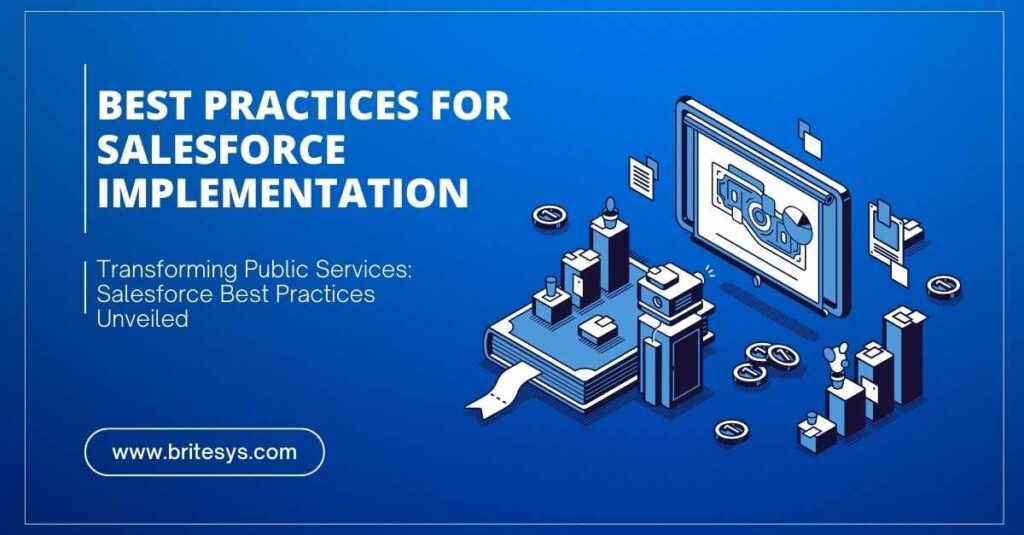
Best Practices for Implementing Salesforce Public Sector Solutions

“Salesforce’ Public sector solutions, formerly known as Vlocity is an integral part” of Salesforce’s industry-specific offerings. It’s tailor-made for public sector agencies to better engage with their stakeholders. If you’re considering deploying this platform or enhancing an existing one, here are best practices to guide your implementation: Deep Dive into Requirements: Before beginning the implementation, it’s essential to have a clear understanding of your agency’s needs. Detailed requirement gathering helps in customizing the platform effectively. Start Small and Scale: Instead of a big-bang approach, consider phased rollouts. Implement core functionalities first, gain user adoption, and then incrementally introduce advanced features. Leverage Out-of-the-Box Features: Public Sector Solutions come with a myriad of built-in functionalities tailored for government needs. Whenever possible, utilize these instead of custom-building features. Invest in Training: For any technology implementation, user adoption is key. Invest time in training your employees on both the basic and advanced features of the platform. Focus on Integration: If you have other systems in place, ensure seamless integration with the Salesforce platform. This ensures data consistency and streamlines processes. Prioritize Data Security: Given the sensitive nature of public sector data, prioritize security. Utilize Salesforce’s robust security features and regularly review access controls and permissions. Stay Updated with Releases: Salesforce rolls out updates regularly. Keep an eye on these updates to leverage new features and improvements. Always test new updates in a sandbox environment before rolling them out to production. Seek Expertise: If your internal team is new to Salesforce or Public Sector Solutions, consider hiring an expert or consulting with a Salesforce partner. Their insights can help streamline your implementation. Feedback Loop: Encourage feedback from users and stakeholders. Regular feedback can help identify areas of improvement and address any challenges promptly. Maintain Documentation: Documenting processes, customizations, and workflows is crucial. It helps in training new employees and serves as a reference for future modifications. Optimize Performance: Regularly monitor the platform’s performance. Address any lag or delay issues promptly to ensure users have a seamless experience. Plan for Continuous Improvement: Technology and needs evolve. Always be open to refining and optimizing your platform based on changing requirements and technological advancements. Conclusion In conclusion, the success of implementing Salesforce Public Sector Solutions rests on a blend of strategic planning, stakeholder involvement, and continuous optimization. Embrace these best practices, and you’ll be well on your way to creating a robust, efficient, and user-friendly platform for your public sector agency.

Uncategorized

Digital Transformation: The Right Approach Makes All the Difference

In today’s rapidly evolving business landscape, digital transformation isn’t just a trend; it’s a strategic imperative. Organizations that navigate this transformative journey effectively are not only surviving but thriving in the digital age. However, one crucial aspect often determines the success or failure of digital transformation initiatives: choosing the right approach. In this blog post, we’ll explore why selecting the appropriate approach is pivotal and how it can drive the success of your digital transformation journey. Understanding Digital Transformation Before diving into the significance of the right approach, let’s briefly define digital transformation. It’s the process of leveraging digital technologies to fundamentally change how businesses operate, deliver value to customers, and remain competitive. It encompasses various aspects, including processes, culture, customer experiences, and business models. The Digital Transformation Dilemma Embarking on a digital transformation journey is akin to setting sail in uncharted waters. It’s both exciting and daunting. Companies that adopt the wrong approach can find themselves lost at sea, struggling to realize the expected benefits and facing unexpected challenges. Here’s why choosing the right approach is paramount: 1. Aligning with Strategic Objectives: The right approach ensures that digital transformation efforts align closely with the organization’s strategic objectives and long-term vision. This alignment guarantees that resources are used effectively to achieve specific goals. 2. Maximizing Return on Investment (ROI): Selecting the appropriate approach helps in identifying and prioritizing the most impactful initiatives. This prevents organizations from investing in technologies or processes that don’t deliver significant ROI. 3. Managing Change Effectively: Change is an inherent part of digital transformation. The right approach considers the human element, emphasizing change management strategies that facilitate smooth transitions for employees and stakeholders. 4. Enhancing Agility and Flexibility: A well-chosen approach allows organizations to remain agile and adapt quickly to evolving market conditions, customer preferences, and emerging technologies. 5. Minimizing Disruption: Digital transformation often involves changes to existing systems and processes. The right approach minimizes disruptions by carefully planning and sequencing changes. 6. Leveraging Data and Insights: Effective approaches emphasize the importance of data-driven decision-making, enabling organizations to harness the power of data analytics for better insights and outcomes. 7. Encouraging Innovation: The right approach fosters a culture of innovation by empowering employees to experiment and innovate within the framework of the transformation strategy. 8. Navigating Risks and Challenges: Every transformation journey comes with its share of risks and challenges. The right approach incorporates risk mitigation strategies and ensures a proactive response to unforeseen obstacles.Approaches to Consider When it comes to selecting the right approach for digital transformation, there are several methodologies to consider, including: Agile Transformation: Emphasizes flexibility, adaptability, and iterative development.DevOps and Continuous Integration/Continuous Deployment (CI/CD): Focuses on automating and streamlining the software development and deployment process. Customer-Centric Approach: Prioritizes enhancing customer experiences and engagement. Digital Ecosystem Strategy: Centres on building partnerships and ecosystems to drive innovation and growth. Data-Driven Transformation: Leverages data analytics and insights to inform decision-making. Digital transformation is a journey, not a destination. The right approach is the compass that guides this journey, ensuring that it leads to success, growth, and long-term competitiveness. Organizations that understand the importance of selecting the appropriate approach are better equipped to embrace the digital age and seize the opportunities it presents. Remember, in the world of digital transformation, your approach can be the difference between merely surviving and thriving in the digital era. Choose wisely, and your transformation journey will lead to lasting success.